

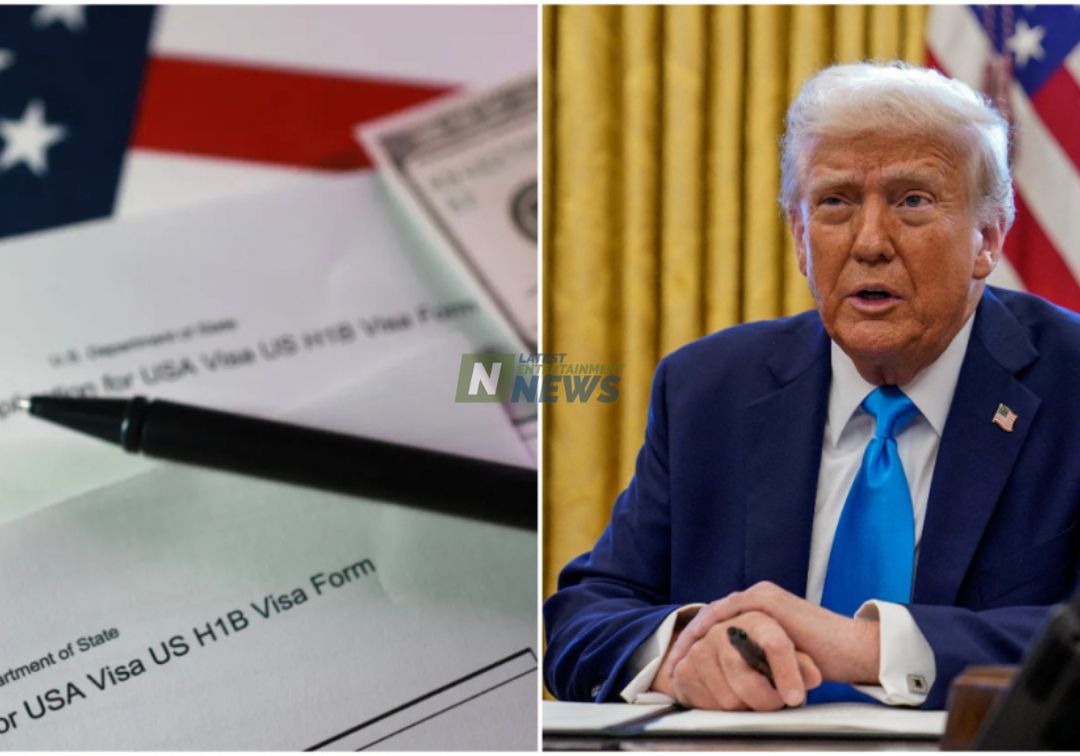
The Trump administration has proposed eliminating the 60-day grace period that currently allows H-1B visa holders and several other categories of foreign workers to remain in the United States after losing their jobs. The proposal, published by the Department of Homeland Security in the Federal Register, would require affected workers to leave the country as soon as their employment ends, rather than giving them a window to secure a new sponsor or wind up their affairs. Given that Indian nationals make up the largest share of H-1B recipients, the change is being closely watched across India’s technology and outsourcing sectors.
What Is the H-1B Grace Period, and Why Is DHS Targeting It?
Introduced in 2017, the H-1B grace period gives eligible visa holders up to 60 days after their job ends to line up another employer, switch their immigration status, or arrange their departure from the US. It isn’t an automatic guarantee in every case — the window can close earlier if a worker’s authorised stay expires first. In practical terms, it has also given laid-off professionals time to handle logistics such as selling property or pulling children out of school before relocating.
Under the newly proposed rule, DHS would do away with that cushion altogether for H-1B holders. The notice reportedly assumes that employers facing a workforce reduction will either reassign the role to an equally qualified American worker or route any replacement hire through the standard I-129 petition process. The proposal isn’t limited to H-1B alone — it would also apply to several related categories, including L-1, O-1, TN, E-1, E-2, H-1B1 and E-3 visas.
How the H-1B Grace Period Change Could Hit Indian Workers and IT Firms
Indian professionals account for a disproportionately large share of the H-1B workforce, which makes this proposal particularly consequential for them. Without the 60-day cushion, a worker who loses a job would have to exit the US almost immediately unless they can arrange a new visa route within days rather than months. That compressed timeline would apply pressure not just on individual employees but also on their employers.
Major sponsors of H-1B visas include consulting firms such as Deloitte, PwC and Ernst & Young, alongside Indian IT and outsourcing majors including Tata Consultancy Services, Infosys, HCLTech and LTIMindtree. Immigration lawyers have noted that scrapping the grace period would sharply reduce the time HR departments have to manage layoffs and offboard foreign employees in an orderly way, making workforce restructuring at these firms considerably more complicated. The rule would also extend to H-1B1 visa holders from Singapore and Chile, as well as Australian nationals on E-3 specialty-occupation visas.
What Happens Next for the H-1B Grace Period Proposal
The rule change is not yet in force. It must go through a 60-day public comment period before DHS can decide whether to finalise it, meaning current H-1B holders retain their existing protections for now. Still, the proposal fits into a broader pattern of tightening H-1B rules this year, including a steep new sponsorship fee announced earlier, and signals that further restrictions on the programme could follow even before this specific rule takes effect. Workers and employers alike are expected to watch the comment period closely, since any final version of the rule could reshape how quickly foreign professionals need to react to a layoff.