

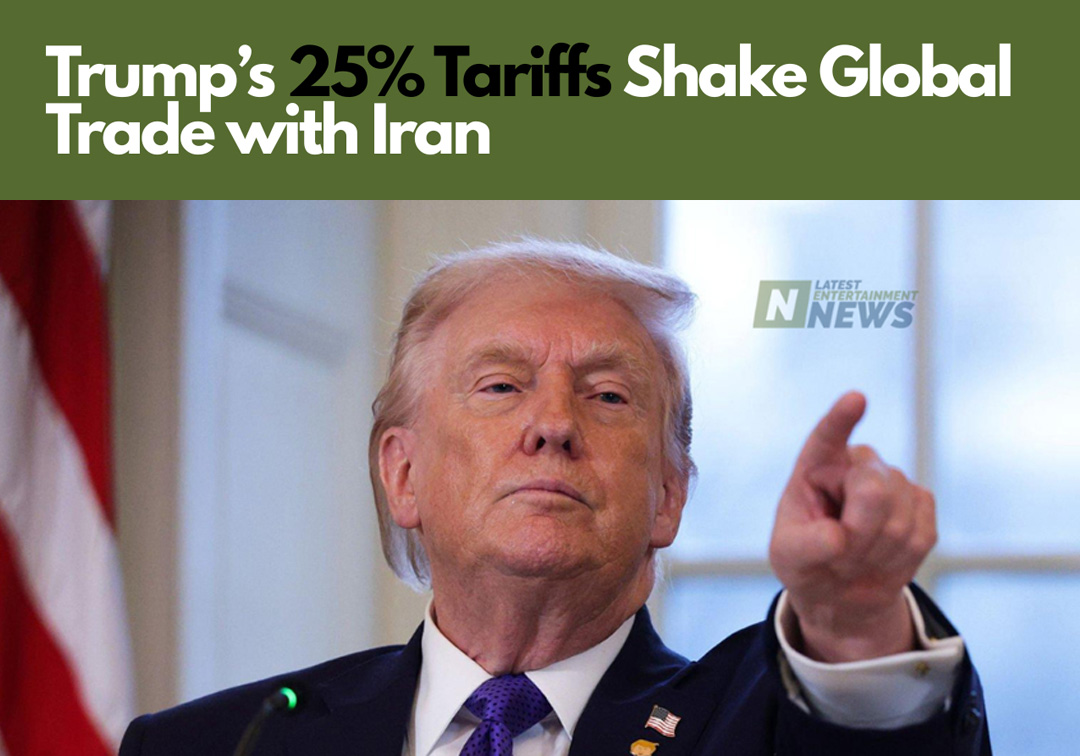
Former U.S. President Donald Trump has made headlines again with a bold move in global trade. He has announced a 25% tariff on any country doing business with Iran, a decision that could send ripples through economies worldwide. Trump described the order as “final and conclusive,” showing a firm stance on enforcing U.S. economic policies.
This decision directly affects major trade partners such as India, China, and Russia, all of which maintain active trade relations with Iran. India, for example, imports crude oil and natural gas from Tehran, while China and Russia have various trade and investment ties. The tariffs could increase costs for these countries, disrupt supply chains, and force governments and businesses to rethink their trade strategies.
Why this matters:
The tariffs are not just a move against Iran—they also serve as a warning to countries globally. Businesses dealing with Iran now face the risk of a 25% extra cost if the U.S. applies the tariff, creating uncertainty in markets and international contracts. Analysts predict potential slowdowns in energy trade, commodity prices, and even investments tied to Iranian goods.
For India, higher import costs for oil and gas could ripple through the economy, affecting everything from fuel prices to industrial production. China and Russia may need to adjust their trade volumes or find workarounds to avoid the tariffs. On a larger scale, this move could escalate global trade tensions, impacting international relations and market stability.
Trump’s decision also highlights the growing trend of economic measures being used as political tools. While the target is Iran, the consequences will be felt globally, forcing countries to reassess their trade policies and partnerships. Companies with exposure to Iran-linked trade must act fast to mitigate risks and navigate these sudden changes.
What experts are saying:
- Global trade disruption: Businesses may face higher costs and logistical challenges.
- Energy market impact: Crude oil and natural gas prices could fluctuate due to supply concerns.
- Policy uncertainty: Countries trading with Iran will need to weigh economic gains against the risk of tariffs.
- Strategic shifts: Nations may seek alternative suppliers or markets to avoid penalties.
This move comes at a time when global trade is already under pressure from inflation, geopolitical tensions, and shifting alliances. While the U.S. sees the tariffs as a method to curb Iran’s economic influence, the broader effect is a warning to any country that might challenge U.S. policies or do business with nations under scrutiny.
In short, Trump’s 25% Iran tariff is more than a headline—it’s a wake-up call for governments and businesses around the world. Those connected to Iranian trade must act quickly, while others will watch closely to see how this reshapes global commerce.