

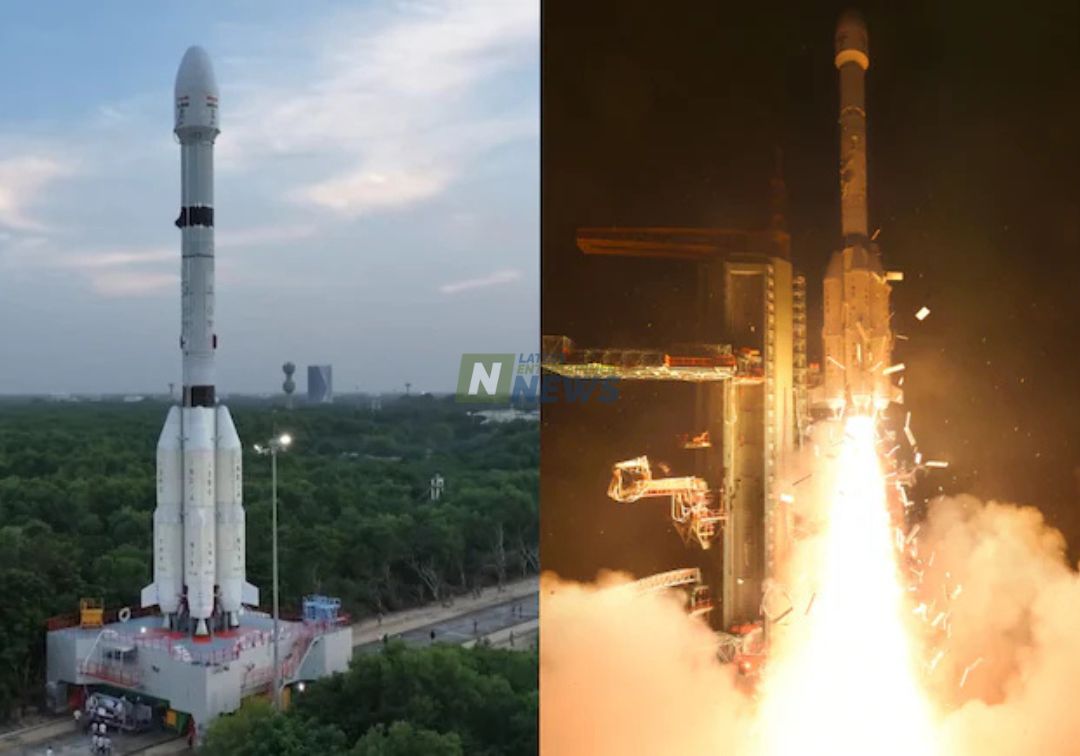
India’s space agency added a powerful new eye in the sky early Friday, successfully placing its EOS-05 satellite into orbit aboard the GSLV-F17 rocket. The mission, which lifted off from the Satish Dhawan Space Centre in Sriharikota, marks a significant milestone for the Indian Space Research Organisation (ISRO) as it strengthens the country’s disaster management, agricultural monitoring, and national security infrastructure through continuous satellite imaging.
The GSLV-F17 EOS-05 launch took place at 2:55 am IST on September 4, 2026, from the second launch pad of the spaceport, carrying a satellite weighing approximately 2,367 kilograms — the heaviest payload the GSLV rocket has ever carried into space. This was the 19th flight of the GSLV vehicle and comes after an eight-month gap in ISRO’s launch calendar, making it a closely watched return-to-flight mission for the organisation. The rocket has earned the nickname “Naughty Boy” within India’s space community due to its history of past technical setbacks.
What EOS-05, Also Known As GISAT-1A, Will Do
EOS-05, also referred to as GISAT-1A, is India’s first Earth observation satellite designed to operate from a geosynchronous orbit, positioned nearly 36,000 kilometres above the planet. Unlike conventional remote-sensing satellites that orbit closer to Earth and can photograph a given location only once every few days, EOS-05 will remain fixed relative to the Indian subcontinent, allowing near-continuous surveillance.
Another giant leap for India in Space!
— Dr Jitendra Singh (@DrJitendraSingh) September 3, 2026
Kudos to Team @isro on the successful launch of GSLV-F17/EOS-05.
EOS-05 is a state-of-the-art Earth Observation satellite and India’s first imaging satellite from Geosynchronous Orbit, enabling advanced imaging across visible, infrared,… pic.twitter.com/1HHJrWM7ze
The satellite is equipped with a 700-millimetre telescope capable of capturing data across visible, near-infrared, and short-wave infrared bands. It will be able to image the entire Indian landmass every 30 minutes, with that interval shrinking to just five minutes over regions of special interest. This near-real-time imaging capability is expected to prove invaluable for tracking floods, cyclones, and forest fires as they unfold, while also supporting agricultural applications such as assessing crop health, soil moisture, and vegetation cover. Officials also point to benefits for national security surveillance and broader environmental monitoring.
Inside The GSLV-F17 Rocket And Launch Sequence
The vehicle behind the mission, GSLV-F17, is a three-stage rocket standing 51.7 metres tall with a liftoff weight of 420.5 tonnes. It placed EOS-05 into a sub-geosynchronous transfer orbit, from where the satellite will use its own onboard propulsion to manoeuvre into its final geosynchronous position over the coming days.
ISRO shared live visuals of the launch on social media, confirming the rocket’s liftoff from Sriharikota. The successful climb into orbit is being seen within the agency as validation of design changes made to the rocket’s upper stages following past setbacks.
Mission Success!
— ISRO (@isro) September 3, 2026
GSLV-F17 has successfully accomplished its mission, placing EOS-05 into the intended orbit.
Sharing a few memorable moments from the lift-off.
For more information:https://t.co/VneB2jgZoY#GSLVF17 #EOS05 #ISRO pic.twitter.com/kv0zB6V5Vi
A Comeback Mission After The 2021 Setback
The launch carries particular significance because of history. In 2021, a similar mission — GSLV-F10, carrying the GISAT-1 satellite (also called EOS-03) — failed to reach orbit after a malfunction in the cryogenic upper stage. EOS-05 represents ISRO’s attempt to recover the imaging capability that was lost in that failed 2021 mission.
With Friday’s successful launch, India now possesses a continuous geosynchronous monitoring tool that officials say did not previously exist in the country’s satellite fleet. The mission is expected to reinforce disaster response mechanisms, agricultural planning, and security surveillance, and is being viewed as another step toward India’s self-reliance in space technology.